
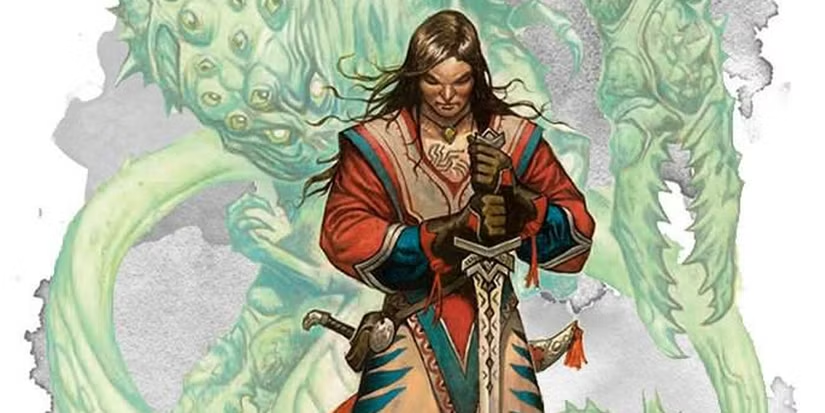


Renewed interest in the Kalashtar concept surfaces amid fresh discussions around Eberron’s expanding lore in Dungeons & Dragons campaigns. Tabletop enthusiasts note recent adaptations pulling this psionic race into broader 5e play, beyond its Sarlona roots. Kalashtar, compound beings of human and quori spirit, draw attention for their dream-haunted duality amid ongoing updates to setting materials. Players grapple with their alien wisdom in home games, while online forums revisit their resistance to psychic incursions. The Kalashtar concept, long tied to Adar’s monastic enclaves, gains traction as creators blend it with standard adventures. Public record highlights their telepathic edge without delving into every quori nuance yet. Coverage emphasizes practical integration for newcomers, spotlighting traits that set Kalashtar apart in party dynamics. This focus emerges naturally from evolving campaign designs.
Origins of Kalashtar
Quori Flight from Dal Quor
Sixty-seven quori spirits broke from Dal Quor roughly 1,800 years past, fleeing persecution under the Dreaming Dark’s shadow. Led by kalaraq Taratai, they navigated mortal dreams to reach Eberron’s plane. Haztaratain Monastery in Adar offered refuge, where monk Hazgaal and followers chose fusion. This union birthed the first Kalashtar: human souls merged with quori essence, creating wandering dreams incarnate. No records detail the exact ritual, but offspring inherited diffused spirits, diluting direct communion. Kalashtar numbers grew slowly across Adar’s peaks. Riedran eyes turned hostile later, blaming psionic disturbances on these newcomers. The fusion held firm, granting innate mental fortitude amid growing threats.
Haztaratain Monks’ Sacrifice
Hazgaal’s students volunteered body and soul, binding quori to flesh in a deliberate act. Taratai guided the process, forging Haztaratai as the progenitor line. Children emerged with partial spirit links, prompting new meditative disciplines. Kalashtar adapted, channeling psionic gifts from this origin. Adar’s isolation shielded early growth for centuries. External pressures mounted by 677 AT, with the Madness of Yaruun sparking invasion. Monks defended keeps like Kasshta, clashing minds against Riedran forces. Shroud resonators, powered by fallen kin, now veil Adar from full assault. That primal bond persists, alien yet stabilizing.
Taratai’s Leadership Role
Taratai, rebel quori of high rank, orchestrated the exodus through dream paths. Arrival at Haztaratain marked a pivot; persuasion won human allies. Post-fusion, guidance shaped Path of Light precepts. Lineage dwindled in later wars, ending with resonator sacrifices. Surviving Kalashtar honor this drive toward il-Yannah, the Great Light. Public lore stresses philosophical rift over raw power. Taratai’s memory fuels resistance, echoed in telepathic whispers. No full quori return manifests, leaving echoes in host minds.
Fusion Mechanics Explored
Human-quori bonding diffused spirit essence across descendants, weakening but broadening influence. Kalashtar gain telepathy and resilience, sans direct voice. Sleep cycles through ancestral visions, severing dream plane ties. This severance blocks spells like dream, yet permits rest. Physical form mirrors humans—tall, slim variations common. Psionic potential varies; some manifest stronger gifts early. Cultural records note emotional restraint as byproduct, curbing inner turmoil.
Early Adaran Expansion
Kalashtar spread through Adar’s mountains post-fusion, building temple-keeps. Path of Light formalized, emphasizing light over darkness. Numbers swelled modestly, focused inward. Riedra’s rise prompted defenses, not conquest. Insular communities formed, wary of outsiders. Ventures beyond Adar rare, driven by anti-Dreaming Dark purpose.
Kalashtar Traits and Abilities
Dual Mind Fortitude
Kalashtar possess advantage on Wisdom saves via Dual Mind, shielding against charms and fears. This stems from quori-human synergy, doubling mental layers. Campaigns highlight reliability against casters. No downside burdens this edge; it activates reflexively. Players leverage it in intrigue-heavy plots. Resistance pairs with it, blunting psychic harm. Standard 5e lists confirm Medium size, 30-foot speed.
Mental Discipline Edge
Psychic damage resistance defines Mental Discipline, key versus mind flayers or aberrations. Quori essence absorbs assaults, turning inward turmoil outward. Eberron materials codify this without variants. Newcomers build around it for front-line roles. No attunement needed; passive bolstering endures.
Mind Link Telepathy
Mind Link enables telepathic speech to visible creatures within 10 times level in feet. Language barriers drop for understanding; recipients grasp intent. Action extends two-way link for one hour, one target only. Stealth ops benefit, coordinating silently. Range scales, rewarding levels. Quori heritage fuels this silent bridge.
Severed from Dreams
Sleep brings quori memories, not Dal Quor visions—immune to dream-requiring magic. Sleep still works, grounding vulnerability. This trait underscores alien nature, replaying spirit pasts. Roleplay yields visions for plot hooks. No fatigue from disconnection; rest restores fully.
Stat and Language Boosts
Wisdom +2, Charisma +1 elevates insight and presence. Common, Quori, one extra language standard. Lawful good lean common, though resisted. Lifespan matches humans, maturing similarly. No dragonmarks manifest, per lore.
Cultural Practices
Path of Light Devotion
Il-Yannah, the Great Light, anchors Path of Light—no gods, pure positive force. Meditation strengthens against darkness. Clerics draw minor power; psions dominate. Adaran temples host rites, communal yet personal. Dreamwalkers diverge, seeking quori unity.
Monastic Daily Life
Children meditate over play, training minds young. Adults deliberate actions, serene exteriors masking conflicts. Compassion flows rationally, not effusively. Friendships subtle—wry smiles, pointed remarks. Emotional control tempers quori wildness.
Naming Conventions
Three-to-five syllables, hard consonants: males end -harath, -khad; females -kashtai, -shana. Halkhad, Lakashtari exemplify. Names evoke heritage, passed lineages.
Riedran Siege Response
Adar endures millennium-long blockade post-Kasshta clashes. Shrouds repel invaders; kalashtar hold vigilant. Some infiltrate Khorvaire cities like Sharn, evading Dreaming Dark. Purpose divides: siege-breakers versus universal good-fighters.
Dreamwalker Fringe Views
Minority dreamwalkers study il-Lashtavar as alien, not evil—aiming Dal Quor return. They trace exodus paths stealthily, hunting Taratai echoes. Mainstream views them risky, potential traitors.
Role in Eberron Society
Adar Stronghold Role
Mountain keeps house most Kalashtar, self-sustaining amid siege. Exports minimal; focus defensive. Monks patrol borders psionically. Invasions repelled through mind clashes historically.
Khorvaire Diaspora Presence
Sharn enclaves shelter exiles, blending quietly. Anti-Dreaming Dark cells operate covertly. Compassion aids locals, earning wary trust. Alien aura sparks curiosity or suspicion.
Dreaming Dark Conflicts
Inspired agents hunt relentlessly, viewing Kalashtar as heretics. Psychic spies infiltrate dreams elsewhere, foiled here. Kalashtar prioritize this cosmic feud.
Inter-Race Dynamics
Polite with all, psionic strangeness distances some. Humans closest kin; elves sense parallels. Dwarves respect discipline. Alignment aids heroic parties.
Adventure Integration Tips
Psionic niches fill support voids—telepathy scouts, Wisdom tanks effects. Classes like Monk, Cleric synergize boosts. Custom origins flex stats now.
Playing Kalashtar Characters
Optimal Class Pairings
Monks harness Dexterity-Wisdom for unarmored defense, Insight shining. Warlocks pump Charisma blasts safely. Paladins tank with saves. Bards persuade telepathically.
Build Strategies
Prioritize Wisdom saves; psychic resist fronts horrors. Mind Link coordinates ambushes. Severed Dreams dodges intrigue spells. Feats enhance psionics.
Roleplaying Depth
Inner quori whispers guide morally; visions plot-personalize. Reserved speech hides turmoil. Compassion intellectual—aid calculated.
Combat Tactics
Position for telepathic buffs; resist mind assaults. Bonus actions advantage socials via variants. Frontline mental shields party.
Non-Combat Utility
Insight/Intimidation edges negotiations. Telepathy spies secrets. Dream immunity quests safely.
Public record on Kalashtar paints a resilient psionic people, forged in dream-flight and fusion, holding Adar against eternal siege. Traits like Dual Mind and Mind Link equip them uniquely for Eberron’s intrigues, yet quori conflicts linger unresolved—Dreaming Dark agents persist, Taratai lineage ghosts absent. Diaspora Kalashtar navigate Khorvaire warily, their compassion tempered by caution. Path of Light offers purpose, but dreamwalkers hint fractures. No full quori return or Riedran peace materializes; shrouds hold, barely. Campaigns thrive on this tension, blending alien gifts with mortal stakes. Forward paths unclear—will il-Yannah prevail, or Dal Quor pull back? Records leave that open, as fresh tables test the bounds.